

Restorative movement for your first few weeks of recovery.
The “fourth trimester” is a season of immense change. Your body has just performed a marathon, and while you might be itching to feel “like yourself” again, the most productive thing you can do right now is slow down.
In these early weeks, we aren’t training for a 5k; we are training for the “mom-a-thon”—lifting car seats, nursing for hours, and carrying a growing newborn. These five movements are designed to reconnect you with your core and pelvic floor without adding stress to your healing tissues.
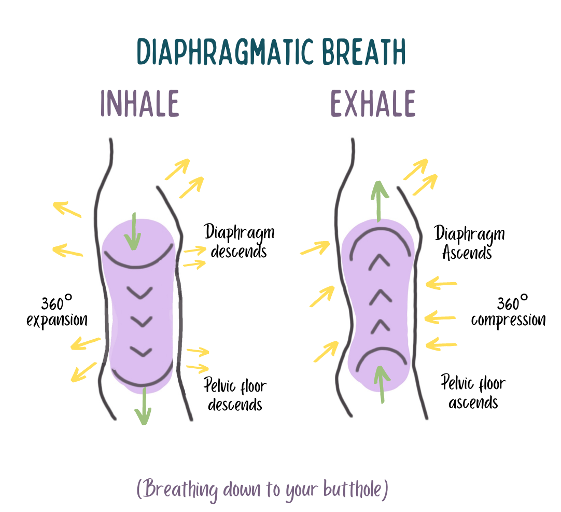
1. Connection Breath (Diaphragmatic Breathing)
This is the foundation of all pelvic floor rehab. It helps “re-wake” the communication between your diaphragm and your pelvic floor.
The Move: Sit comfortably or lie on your back. Place your hands on your lower ribs.
The Goal: Inhale deeply, feeling your ribs expand outward and your pelvic floor relax. As you exhale, imagine a gentle “lift and glow” in your pelvic floor.
Why it helps: It reduces pressure on your healing midline and helps manage that “heavy” pelvic sensation.
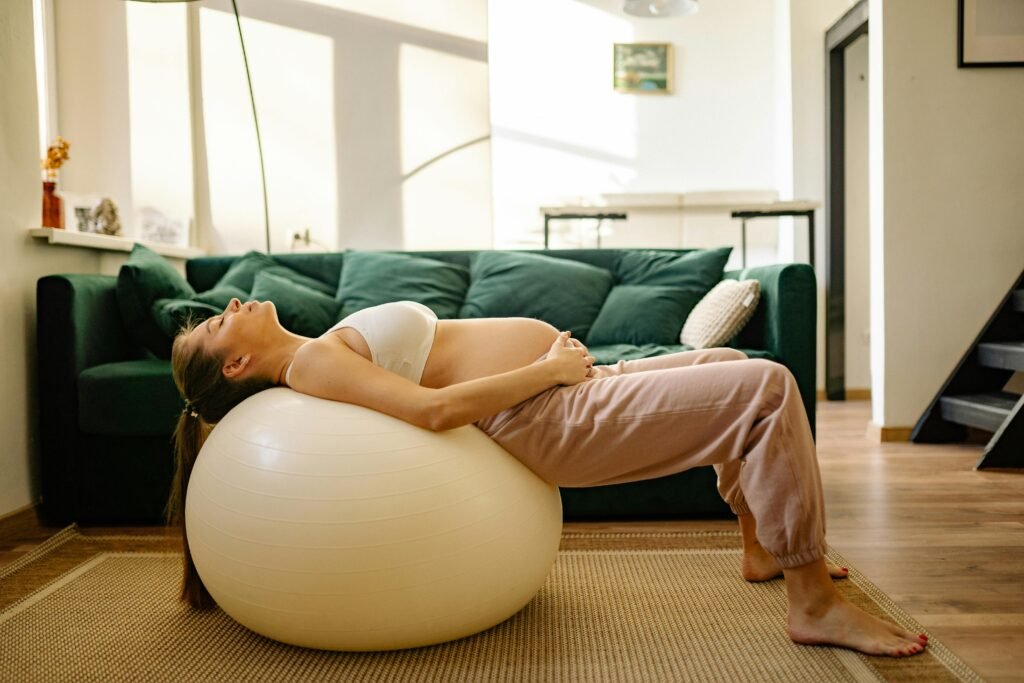
2. The Pelvic Tilt
Postpartum posture often involves a “tucked” pelvis or a heavy arch from carrying a baby. Pelvic tilts help find your neutral spine again.
The Move: Lying on your back with knees bent, gently flatten the small of your back against the floor by tilting your hips toward your face. Then, slowly tilt them away to create a small arch.
Why it helps: Relieves lower back pain and gently wakes up the deep abdominals.
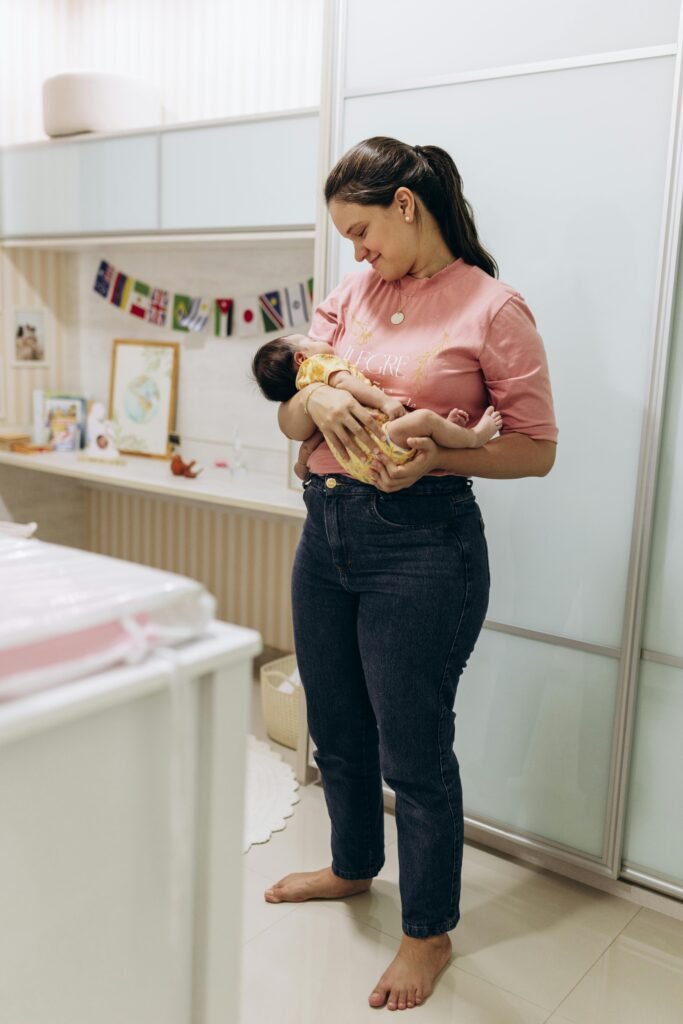
3. Seated Scapular Squeezes (The “Nursing Stretch”)
Let’s be real: nursing and rocking a baby can lead to “hunchback” posture and neck pain.
The Move: While sitting tall, imagine squeezing a pencil between your shoulder blades. Hold for 3 seconds and release.
Why it helps: Opens up the chest and counteracts the forward-slumping posture of early motherhood.
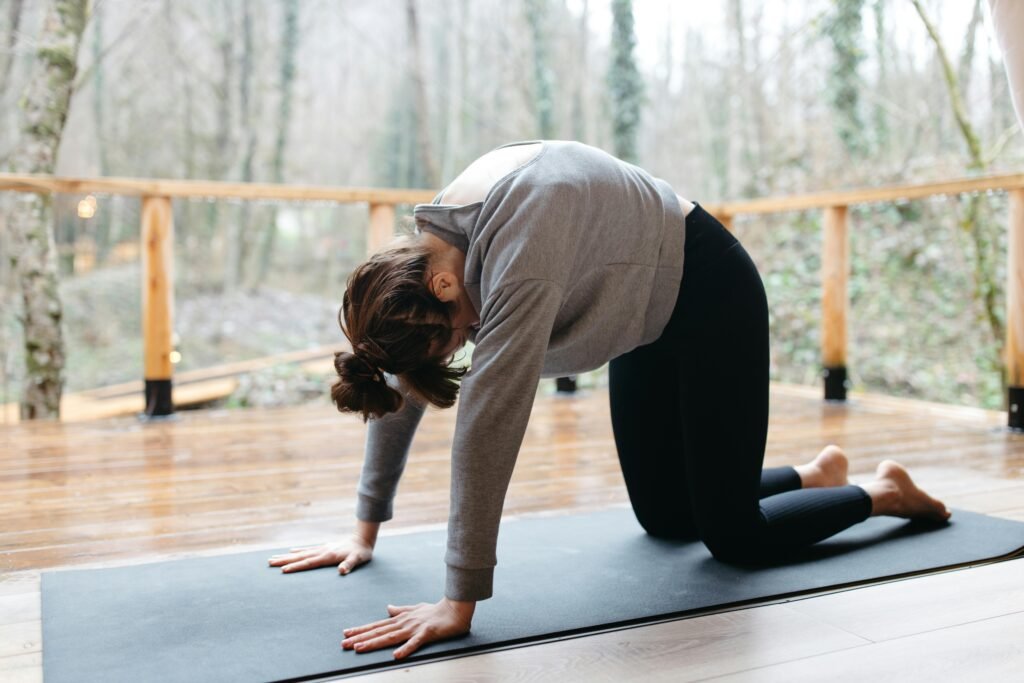
4. Modified Cat-Cow
This provides a gentle massage for the spine and allows your abdominal organs to settle into a supported position.
The Move: On hands and knees, gently move your spine up toward the ceiling (Cat) and then slightly let your belly drop (Cow).
Why is it modified: Keep the “Cow” movement small to avoid over-stretching your healing abdominal wall.
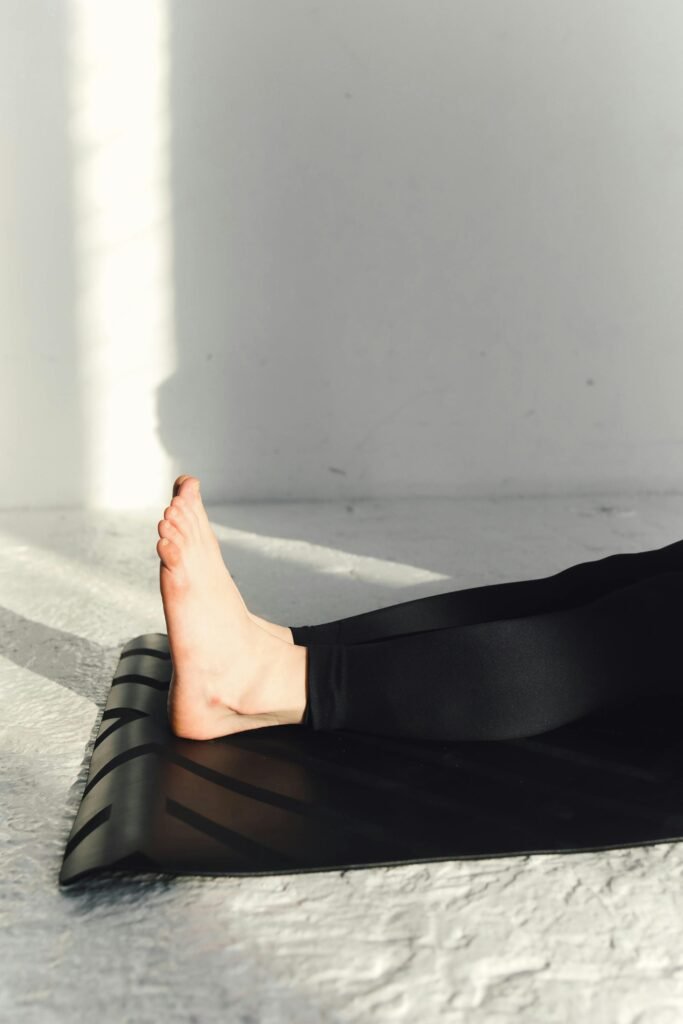
5. Heel Slides
Once you feel steady with your breathing, heel slides are a great way to introduce very light load to your core.
The Move: Lying on your back, slowly slide one heel out until your leg is straight, then slide it back in using your breath to stay stable.
Why it helps: It’s the first step in rebuilding core stability for daily movements like walking and lifting.
A Note from Sonya:
Listen to your body. If you experience any increased bleeding, sharp pain, or a feeling of “bulging” in the pelvic floor, back off and rest. You have nothing to prove and a whole lifetime of movement ahead of you!
Need more personalized support?
Recovering from birth isn’t a “one size fits all” journey. If you have questions about your specific symptoms or aren’t sure where to start with your rehab, I’m here to help. I offer free 30-minute consultations to help you understand your body better and create a plan that feels right for you.